Lead Flashing Repair Hayes West London | Roof Techies
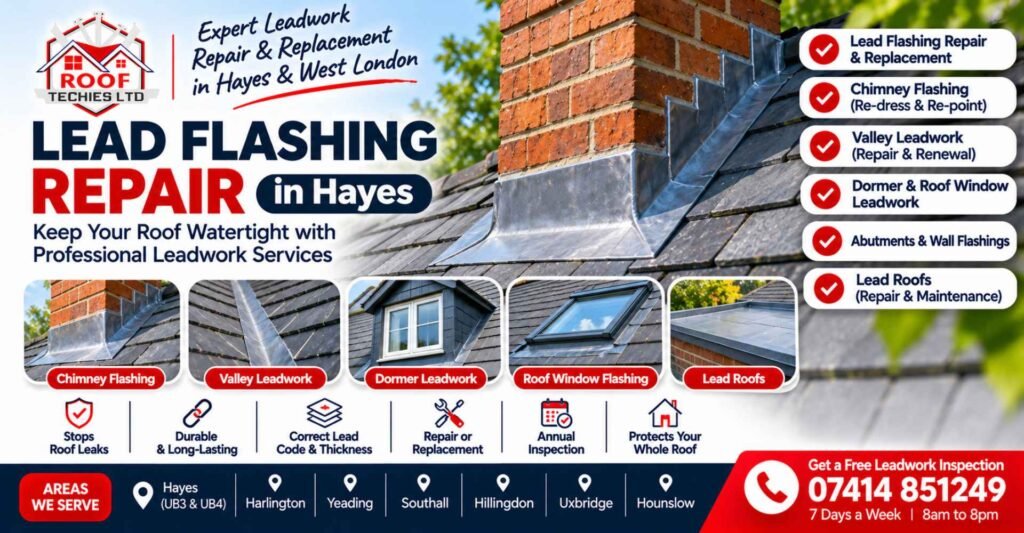
Lead Flashing Repair Hayes West London | Roof Techies Lead flashing repair in Hayes West London means replacing cracked, lifted or failed lead where the roof meets a chimney, valley, dormer, roof window or wall. Lead lasts a long time, but it moves with temperature and weather, so the joints are where failures usually start. Most leaks at a chimney or valley begin in the leadwork rather than in the tiles or slates. This guide explains where leadwork is found, the signs of failure, the repair methods roofers use and what affects the cost, so homeowners in Hayes West London can compare quotes on a fair basis.
What leadwork does on a roof
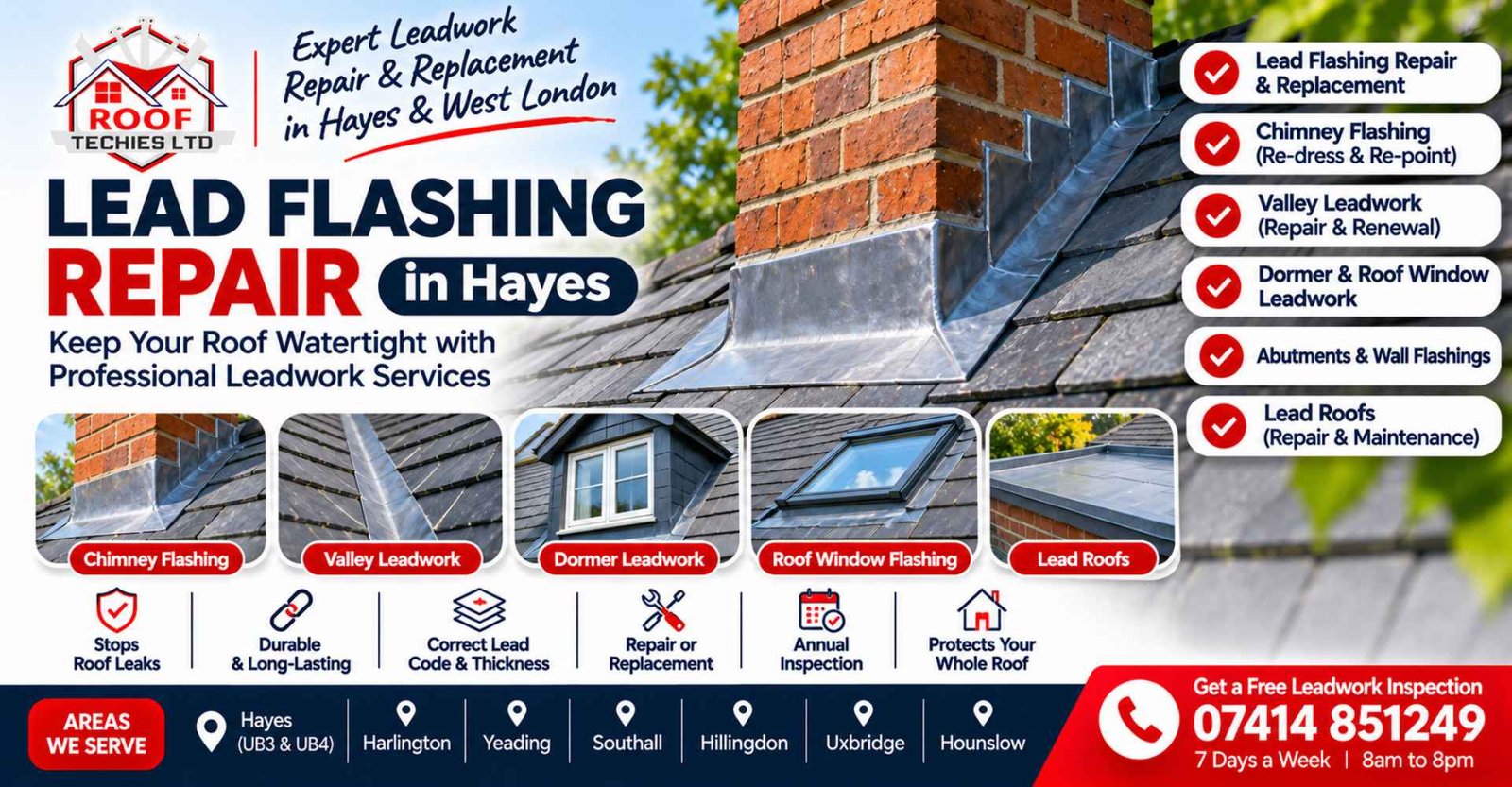
Lead Flashing Repair Hayes West London | Roof Techies Leadwork is sheet lead, shaped and jointed to seal the points where water is most likely to enter a roof. Flashings cover the junction between the roof and a vertical surface, such as a chimney stack or a wall. Valleys carry water from two roof slopes into one channel. Dormers and roof windows have cheeks and aprons that shed water around the frame. Each of these details works only when the lead is sound, correctly dressed and securely jointed.
Lead is traditional for good reasons. It is soft enough to form around awkward shapes, durable and easy to repair. Its weak point is movement. Lead expands in heat and contracts in cold, which can crack the joints or pull the lead away from the masonry over many years.
Where leadwork is found
- Chimney stacks. Stepped and apron flashings where the chimney meets the roof.
- Valleys. The channels where two roof slopes meet, which carry the most water.
- Dormers and roof windows. The cheeks and tops around the window or dormer.
- Abutments. Where a roof meets a wall.
- Flat roof edges. Upstands and edge details that seal the covering.
- Lead roofs. Flat or low-pitched roofs covered entirely in lead, common on bays, porches and dormer tops.
Signs your leadwork needs repair
Look for cracks or splits in the lead, especially at folds and joints. Lifted or loose flashing that no longer lies flat is another sign. Gaps between the lead and the masonry, where the mortar has failed, let water run behind the flashing. Corroded or thinned lead looks dull, pitted or patchy. Inside the house, watch for damp on the chimney breast, staining in the loft near the flue, or damp near a valley after heavy rain. Any of these means the flashing should be checked soon, before the water damages the timber and plaster beneath.
Common leadwork repairs
Re-dressing lead
Lead that has lifted or folded can often be re-dressed. The roofer flattens and shapes the lead back to the surface and checks the lap. This is quick and effective while the lead is still sound.
Replacing a section
Cracked or thinned lead is cut out and replaced with new lead, joined to the old sheet with a proper lap. The thickness of the new lead matters, and a good roofer will use the right code for the job.
Re-pointing and chasing chimney joints
Chimney flashings are often held in a chase, which is a groove cut into the masonry. Where the mortar has failed, the joint is cut out, re-pointed and the lead is tucked into a new chase. This is often the repair that stops a chimney leak for good.
Replacing a valley
Valleys carry the most water and can fail badly. A repair may mean replacing a section or the full valley, depending on the damage and the condition of the boards beneath.
Full replacement
If the lead is widely cracked, thinned or failed, a full replacement of the chimney, valley or roof may be the better option. The written quote should explain why.
Lead roofing
Lead roofs cover flat or low-pitched areas with sheet lead, jointed and dressed around the edges. They are durable and attractive, but they need expansion detailing and careful jointing. The timber boards beneath must stay dry and sound, because rot under a lead roof is easy to miss. When a lead roof is repaired, the boards are checked, the lead is re-dressed or replaced and the drip and edge details are made to shed water away from the walls.
Choosing the right leadwork for your roof
Lead Flashing Repair Hayes West London | Roof Techies The detail depends on the roof. Chimneys need stepped and code-led flashings with a proper apron and chase. Valleys need wide, well-lapped lead with a clear fall. Dormers and roof windows need cheeks and tops dressed to shed water. Flat roofs need upstands and edges with secure joints.
What affects the cost of leadwork repair
The main factors are the length of lead, the complexity of the chimney or valley, the height and access of the roof, and whether the masonry needs re-pointing. A simple chimney re-dress on an accessible roof costs far less than a full valley replacement on a steep, high roof. A written quote should list each piece of leadwork separately.
Why leadwork matters for the whole roof
Leadwork is often the difference between a roof that stays dry and one that keeps leaking. A roofer who only looks at the tiles or slates can miss the real cause. On Hayes West London homes, chimneys and valleys are among the most common sources of leaks we see, so the leadwork should be checked at every inspection. Our tile roof repair and slate roof repair services often need leadwork at the same visit.
Annual leadwork check
A simple check once a year helps leadwork last. Look at the chimney for cracked mortar or loose flaunching. Clear debris from valleys, because it holds water in the channel and can lift the lead. Look for lifted edges on dormers, roof windows and abutments, especially after storms. Check inside for damp on the chimney breast or near a valley. Clear the gutters and outlets that feed the leadwork.
Common mistakes with leadwork repairs
Several mistakes come up often. The first is patching lead with sealant rather than dressing it properly. Sealant can look like a repair, but it fails within a few seasons and hides the original fault. The second is fixing the flashing while the mortar that holds it is failing, which means the leak returns. The third is using lead that is too thin for the job, which cracks early at folds and joints. The fourth is leaving a valley clear of debris, which holds water and lifts the lead. A good repair addresses each of these points.
The code of lead and why thickness matters
Lead is sold in codes that indicate its weight per square metre. Thicker lead is heavier and can take more movement and more foot traffic. Chimney aprons, valleys and lead roofs need heavier sections, while small details can use lighter lead. A roofer should state the code on the quote, because using lighter lead than the job needs is a common cause of early cracking. Lead Flashing Repair Hayes West London | Roof Techies
Leadwork and the rest of the roof
Leadwork does not work alone. It sits between the covering and the masonry, so a leak at the chimney may come from the tiles, the mortar or the lead. A repair should check all three. The same goes for dormers and roof windows, where the lead works with the timber cheeks, the covering and the window frame. Looking at the roof as a whole gives a better repair and a longer-lasting result.
Recognising a poor leadwork repair
Watch for lead bedded in sealant rather than dressed, mortar packed into a chase without a drip, or exposed nails that will rust and work loose. A good repair leaves the lead flat, neatly lapped and secure, with no sealant showing on the outside of the joints. If you see these signs after a repair, ask the roofer to return and check the work.
Frequently asked questions
How do I know if my chimney flashing is leaking?
Damp on the chimney breast, staining in the loft near the flue or water running down the chimney after rain all point to a flashing problem. A roofer can confirm the cause during an inspection.
Can lead be repaired or does it always need replacing?
Lead can often be repaired by re-dressing, patching or re-jointing. Replacement is needed when the lead is badly cracked, thinned or corroded.
Why do lead valleys keep leaking?
Valleys carry a lot of water, so small gaps or lifted lead cause big leaks. Repairs often mean re-dressing the lead, fixing the joints and checking the tile or slate lap around it.
How long does lead last?
Lead can last a very long time when it is installed and maintained well. Its lifespan depends on thickness, joints and exposure.
Is leadwork repair a one-day job?
Many repairs take a day, especially small chimney or valley jobs. Larger lead roofs or full valley replacements take longer.
Get a free leadwork inspection in Hayes West London
Phone 07414 851249, 7 days, 8am to 8pm. Serving Hayes UB3 and UB4, Harlington, Yeading, Southall, Hillingdon, Uxbridge and Hounslow. See our leadwork service page.