Slate Roof Repair Hayes West London
Slate roof repair in Hayes usually means replacing cracked or slipped slates, renewing the nails that hold them and checking the flashings around the roof. Most jobs are small. A slipped slate caught early can be fixed in a single visit. Left alone, it lets water reach the battens and the loft, and the repair then becomes much larger. This guide explains the signs to look for, how a professional repair is carried out and what affects the cost, so you can compare quotes fairly.
What slate roof repair covers
A slate roof is built in layers. The slates sit on battens, which are timber strips fixed to the rafters, and each slate is held by two nails through its top edge. The overlap between slates is called the lap, and it is what sheds rain. A repair restores one or more of these parts: the slate itself, the nails, the battens beneath, or the flashings where the roof meets a chimney, valley or dormer.
Slate repair is therefore more than swapping a broken piece. A good roofer checks why the slate failed. A cracked slate may have been hit by a branch, but a slipped slate usually means the nails have corroded or the slate was fixed badly in the first place. Fixing the cause stops the same problem returning in a year or two.
Signs your slate roof needs repair
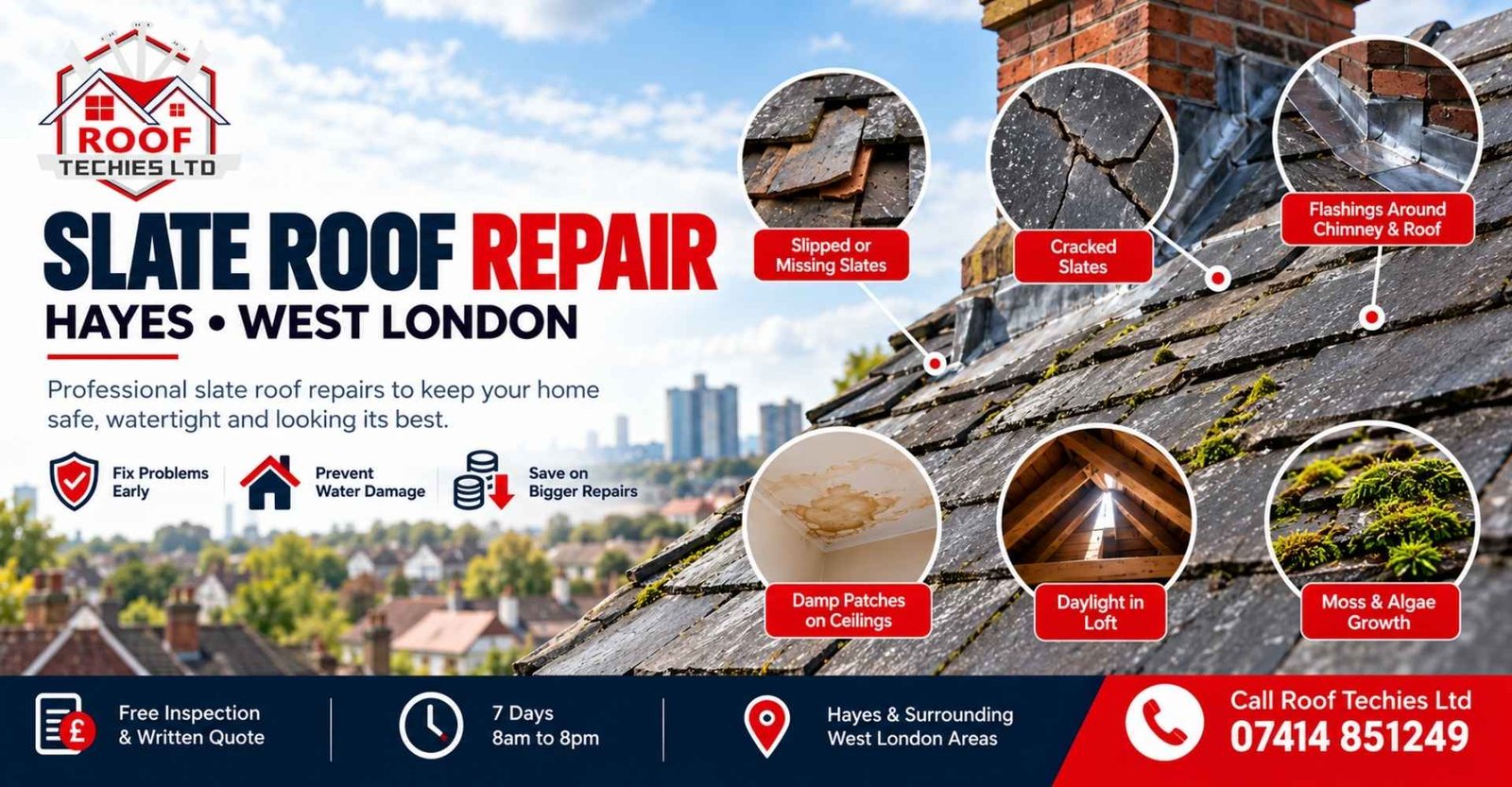
Many slate problems can be seen from the ground with binoculars. Look for:
- Slipped slates that sit lower than their neighbours or stick out of line
- Cracked or split slates, often after storms, falling branches or hail
- Missing slates, which leave gaps where felt and battens are exposed
- Lifted edges, especially at the eaves and near ridges
- Moss and algae that hold water and push slates up over time
From inside the house, watch for damp patches on the top floor ceiling, staining down a chimney breast, or daylight visible through the roof in the loft. Any of these means the covering has failed somewhere, and it should be inspected.
The slate repair process, step by step
A standard slate repair follows a clear sequence:
1. Inspection. The roofer checks the whole roof from ground level and, where access allows, from a ladder. They look for the source of the leak, not only the visible damage.
2. Identifying the slate type. Slate varies in thickness, size and colour. The roofer matches the replacement to the existing stone so it sits flush.
3. Lifting the surrounding slates. The slates above the damaged one are carefully eased out so the broken slate can be removed without breaking more.
4. Fitting the replacement. The new slate is fitted with the correct lap and secured with copper or stainless steel nails.
5. Checking the flashings. Lead around chimneys, valleys and dormers is inspected and repaired if needed.
6. Written report. The quote or report shows the slates replaced, the fixings used and any further recommendations.
This process matters because slate is brittle. Walking across a roof or forcing a slate into place can crack neighbouring slates, so a repair should always be carried out by a trained roofer.
Choosing the right materials
Two details decide whether a slate repair lasts. The first is the fixing. Copper and stainless steel nails are the standard, because they resist corrosion. Plain steel or iron nails rust and fail, which is why slates that were repaired with cheap fixings often slip again within a few seasons.
The second is the slate itself. Welsh slate has been used on British roofs for centuries and is still widely sourced. Cumbrian slate looks similar but can vary more in thickness. Imported slates are often more uniform. Reclaimed slate is available for older roofs, and it is the best way to match a period property. A repair that uses slightly different slate is noticeable, so ask how the roofer will match the stone.
What affects the cost in Hayes
The cost of slate roof repair depends on five main factors:
- Number of slates. A single slate on an accessible roof is a quick job. Several slates across a large area take longer.
- Access. A steep or high roof needs scaffolding or specialist access, which adds to the cost.
- Condition of battens and underlay. If the timber is rotten, the repair grows, because the battens must be renewed.
- Flashings. Leadwork that needs re-dressing or replacing is charged separately.
- Matching the slate. Reclaimed or hard-to-source slate can take longer to find and cost more.
The most useful way to compare quotes is to ask each roofer for a written scope that lists these items separately. A low figure that leaves out nails, flashings or clean-up is rarely a saving in the long run.
Slate repair or full re-slate?
Repair is usually the right answer when the damage is in one or two areas, the battens are sound and the slates are still stable. A full re-slate may be better when the slates are delaminated, brittle across most of the roof, or when repairs are needed every year. In that case, the cost of repeated repairs can add up to more than replacement. A written assessment should explain the difference, so you can decide with the facts in front of you.
Keeping a slate roof in good condition
After a repair, a few habits make the roof last longer:
- Check the roof twice a year, in spring and autumn
- Keep gutters clear so water does not back up under the eaves
- Trim overhanging branches that rub or drop debris
- Check the loft after heavy rain for new damp or daylight
- Book a roof clean if moss is building up
Common mistakes homeowners make with slate
Several mistakes come up repeatedly. The first is treating a slipped slate as cosmetic. It is not. A slate that has moved exposes the nail holes and the felt below, and water will find that route. The second is letting moss build up, because moss lifts slates from underneath and holds water against the surface. The third is ignoring the flashings, since a perfect slate roof can still leak at the chimney. Finally, many people wait for a leak to appear inside before calling anyone. By then, the battens and the plaster below may already be damaged.
Another common error is using a handyman with ladders and no roof experience. Slate is brittle, and a repair carried out by someone who has never handled it can crack two or three more slates. A trained roofer who understands the lap and fixing requirements is the safer choice.
Storm damage and insurance
Strong winds, heavy hail and falling branches can crack or dislodge slates in a single event. After a storm, check the ground around the house for broken slate and look in the loft for daylight or wet insulation. Many home insurance policies cover storm damage to the roof, but the terms vary and there is usually an excess. Read your policy before you agree work, and keep dated photos of the damage. Ask your roofer to record the cause in the written report, because insurers often ask for that evidence.
Questions to ask before you book a slate repair
A short set of questions helps you compare roofers quickly:
- Will you inspect the whole roof, or only the area I point out?
- Which nails will you use, and why?
- How will you match the slate, and what happens if an exact match is not available?
- Does the quote include flashings, battens and clean-up?
- Do you carry public liability insurance, and can you share the certificate?
- Will you give me a written guarantee for the repair?
A roofer who answers these clearly and puts the answers in writing is usually a safe choice.
Frequently asked questions
How much does slate roof repair cost in Hayes?
The cost depends on the number of slates, access, the condition of the battens and any flashing work. Every repair should start with a free inspection and a written quote that lists each part of the job.
Can a single broken slate be replaced?
Yes. A single slate can be replaced by lifting the slates around it and fitting a matching replacement with new fixings. This is one of the most common small repairs.
Will a slate repair match my existing roof?
In most cases a close match is possible, especially with reclaimed stock. On older roofs a perfect match is not always available, and a good roofer will tell you before work starts.
Why do slates keep slipping?
The most common reason is corroded or failed nails. Repairs should use copper or stainless steel nails and check the battens beneath.
How long does a slate repair take?
Most single-area repairs are completed in one visit. Larger jobs or flashing work can take several days, depending on the weather.
Get a free slate roof quote in Hayes
If your slate roof has slipped, cracked or missing slates, or a leak you cannot trace, get in touch for a free inspection and written quote.
- Phone: 07414 851249
- Hours: 7 days, 8am to 8pm
- Area: Hayes, Harlington, Yeading, Southall, Hillingdon, Uxbridge and Hounslow
Find out more on our slate roof repair service page, or see our roof cleaning and leadwork services if the inspection finds related work.