Why roof cleaning matters more than most West London homeowners realise
The roof is the most exposed surface of your home, subjected daily to rain, UV, bird droppings, organic debris, and the humid London climate that makes moss, algae, and lichen growth almost inevitable on north-facing and shaded slopes. A clean roof is not merely an aesthetic concern — it is a functional one with direct consequences for the longevity of your roofing materials, the efficiency of your drainage system, and ultimately the structural integrity of your property.
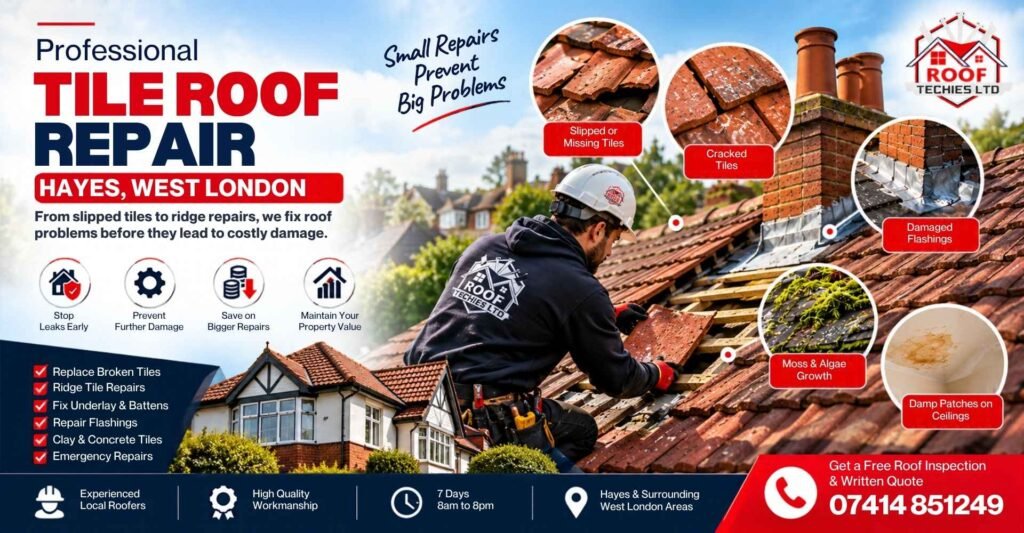
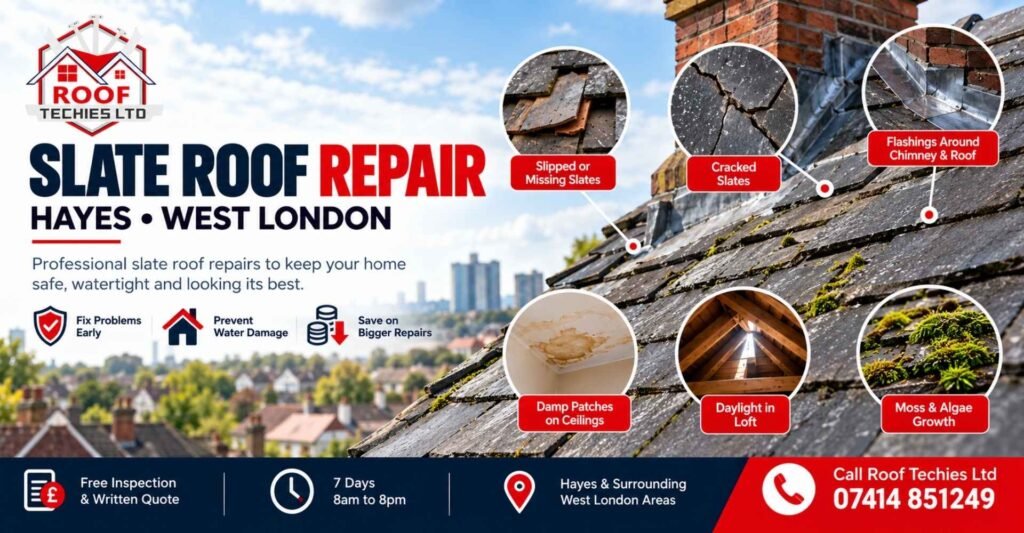
Moss is the most visible and common roofing problem across West London. The soft, green cushion that looks almost attractive on a cottage roof in the country is actively damaging on a suburban tile or slate roof in Hayes or Ealing. Moss holds moisture against the roofing material, preventing proper drying after rain. Over years, this constant moisture retention causes spalling and frost damage to concrete tiles, accelerates nail corrosion on slate roofs, and supports the growth of lichen — which is significantly harder to remove once established.
Organic growth in gutters — decomposed moss, algae, and leaf debris — is also one of the primary causes of blocked gutters and overflowing water at wall plate level, leading to damp in external walls and rot in fascia boards. A professional roof clean that includes gutter clearance addresses both the roof covering and the drainage system in a single visit.
Soft wash vs pressure washing — understanding the key difference
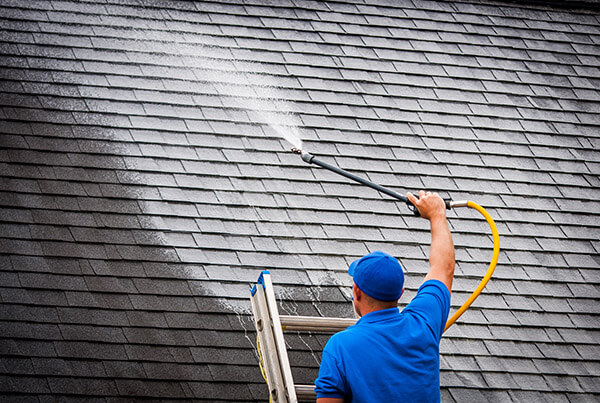
The debate between soft washing and pressure washing is important for anyone considering roof cleaning in West London. Many homeowners assume that a pressure washer — particularly the powerful petrol-driven units used commercially — is the most effective way to remove moss and algae from a roof. This is not correct, and for tile and slate roofs, high-pressure washing can cause significant damage.
Pressure washing at high psi strips the surface coating from concrete tiles, accelerating their natural degradation and leaving them more porous and vulnerable to future moss growth. On slate roofs, pressure washing can dislodge fragile slates, strip surface laminations, and drive water under adjacent slates — creating leaks that did not exist before the clean. It can also saturate the roof felt and insulation beneath, leading to damp problems inside the property.
Soft washing uses low-pressure water combined with specialist biocidal cleaning solutions that kill moss, algae, lichen, and organic growth at the root level. Rather than blasting the surface clean, soft wash penetrates the organic matter and kills it biologically. The dead material then washes away naturally over subsequent weeks of rainfall. This approach is far less traumatic to the roof surface, effective on all roof types, and leaves a biocidal residue that inhibits regrowth for significantly longer than a pressure wash.
At Roof Techies, our standard roof cleaning service uses the soft wash method for all tile and slate roofs, with pressure washing reserved for hard surfaces — driveways, patios, and concrete flat roofs — where it is safe and appropriate. For moss removal advice specific to your roof type, including slate roof repair West London needs that may accompany a cleaning job, we assess each roof individually before beginning.
What does a professional roof clean include?
A comprehensive professional roof clean from Roof Techies covers the following stages. First, a pre-inspection of the roof covering, ridge tiles, chimney, flashings, and gutters to identify any repair needs that should be addressed before or alongside the clean. Attempting to clean a roof with broken or loose tiles, failed ridge bedding, or leaking flashings can drive water into areas that are already vulnerable.
Application of biocidal solution: using low-pressure spray equipment, the soft wash solution is applied evenly across the entire roof surface, ensuring coverage of all moss, lichen, and algae colonies including those that are not yet visibly established.
Manual removal of heavy moss: where moss colonies are thick — several centimetres deep in some cases on neglected roofs — manual soft scraping and brushing is used to remove the bulk of the material before or after biocide application. This reduces the volume of organic material washing into the gutters.
Gutter clearance and flush: all gutters are cleared of accumulated debris, downpipes are checked for blockages, and the gutter run is flushed with water to verify clear drainage. This is best carried out after the roof clean to capture any material loosened during the process.
Ridge and verge inspection: ridge tiles are examined for cracked or failed mortar bedding, and any pointing that has deteriorated is identified for repair. Failed ridge bedding is a common source of water ingress and can be repaired at the same time as the roof clean with minimal additional disruption.
Post-treatment biocide coating (optional): a concentrated biocidal coating can be applied after cleaning to provide long-lasting protection against moss and algae regrowth. Quality biocide treatments can extend the clean roof period to three to five years in West London conditions.
How often should you clean your roof in West London?
The frequency of professional roof cleaning depends on several factors: the proximity of trees that shed leaves and create shaded, damp conditions; the orientation of the roof slope (north-facing slopes receive less UV and dry more slowly, encouraging faster moss growth); the type of roofing material; and whether a biocidal post-treatment was applied after the previous clean.
As a general guide for West London properties, a professional roof clean every two to four years maintains roofs in good condition. Properties with significant nearby trees — common in the residential streets of Ealing, Hillingdon, and the older suburbs of Hounslow — may need attention every two years. Properties with a post-treatment biocide coat applied after each clean can typically extend the interval to four or five years.
Between professional cleans, it is worth inspecting the gutters at least twice a year — in early spring and late autumn — and clearing any debris accumulation that could lead to blocked drainage. Well-maintained gutters are the best protection against the secondary water damage that often accompanies moss growth. For comprehensive gutter maintenance, see our fascias soffits and guttering page.
Roof cleaning costs in West London — 2026 price guide
Roof cleaning costs vary depending on the size and pitch of the roof, ease of access, the extent of moss and organic growth, and whether additional services such as gutter clearing and ridge repointing are included. The following gives a realistic picture for West London properties in 2026.
A standard semi-detached property with a two-slope roof (front and back) in the Hayes, Ealing, or Hillingdon area typically costs between £400 and £750 for a full professional soft wash roof clean including gutter clearance. This assumes no significant additional repair work is needed — if ridge tiles require repointing or slates need replacing as part of the visit, these are quoted separately.
A detached property with a four-slope hipped roof or larger gable roof typically runs between £600 and £1,100. Properties with significant moss build-up, complex rooflines, or where scaffolding is required due to access restrictions carry higher costs.
Post-treatment biocide coating adds approximately £100–£200 to the above figures and is strongly recommended as it significantly extends the clean period and protects the investment made in the initial clean.
An annual gutter clean — without a full roof clean — typically costs £80–£200 for a standard West London semi-detached, depending on the length of guttering and number of downpipes.
Does roof cleaning damage your roof? Setting the record straight
When carried out correctly using appropriate methods — soft wash for tile and slate, proper biocidal chemistry, manual moss removal before pressure is applied — professional roof cleaning does not damage the roof. The concerns that circulate online relate almost exclusively to high-pressure cleaning, which does cause damage, and which responsible contractors do not use on tile or slate.
Homeowners who have witnessed tiles or slates becoming dislodged during a roof clean have almost always experienced work carried out at high pressure by a contractor who did not understand the appropriate method for roofing materials. This is why asking about cleaning method before commissioning any contractor is essential.
After a soft wash clean, tiles and slates may look slightly different for a few weeks as the dead organic matter slowly weathers away. This is entirely normal and temporary — the roof will not be perfectly clean immediately after treatment. Homeowners expecting to see an instant transformation may be surprised; the organic material continues to die back over four to eight weeks as the biocide works through the colony.
Frequently asked questions — roof cleaning West London
Q: Will my home insurance cover a roof clean?
No — routine maintenance including roof cleaning is not covered by home insurance. However, if moss-related roof damage leads to a covered event such as storm damage being worse because of weakened tiles, the insurance claim may include related repairs.
Q: Can roof cleaning be done in winter?
Yes, biocidal treatments remain effective at temperatures above 5°C. However, we do not carry out work on icy or frosted roofs for safety reasons. Winter cleaning — particularly in November and early spring — is actually a good time as the reduced UV helps the biocide penetrate before the active growing season returns.
Q: How do I stop moss coming back?
A post-treatment biocide coat after cleaning is the most effective prevention method. Zinc or copper strip installed along the ridge also provides long-term moss inhibition — rainwater passing over the metal produces a trace run-off that inhibits moss growth across the entire slope below it.
Q: Is the cleaning solution safe for gardens?
Professional-grade biocide solutions used for roof cleaning should be applied in a controlled manner that minimises run-off. A responsible contractor will advise on protecting sensitive plantings directly below the roof drainage path, particularly where gutters empty directly onto soil rather than into drains.