Why skylights are one of the smartest investments for West London homes
Natural light is one of the most sought-after qualities in any West London home, yet the density of the housing stock — terraced properties with long rear gardens, semi-detached homes on narrow plots, and converted flats where windows are fixed in position — means that many rooms receive only limited daylight. A well-placed skylight can transform the character and feel of a room completely, introducing daylight from above in a way that no additional window in a wall can replicate.
Beyond aesthetics, natural light from above has been shown to improve mood, productivity, and sleep quality — all of which have made roof windows and skylights an increasingly sought-after feature in the residential property market. Valuers consistently report that properties with quality skylights — particularly in kitchens, bathrooms, and loft conversion bedrooms — achieve premiums over comparable properties without them.
In energy performance terms, the latest generation of double and triple-glazed skylight units with low-E coatings and argon-fill offer thermal performance that meets or exceeds the requirements of Part L of the Building Regulations. Modern units are significantly more thermally efficient than earlier single-glazed or early double-glazed designs, meaning that adding a skylight today need not come at the cost of increased heat loss.
Types of skylights available for West London homes
Understanding the different product types available helps homeowners make an informed choice for their specific roof and room requirements. The main categories are: pitched roof windows (Velux-type), flat roof dome lights, flat roof glazing units (walk-on and non-walk-on), and roof lanterns.
Pitched roof windows (Velux and equivalent brands)
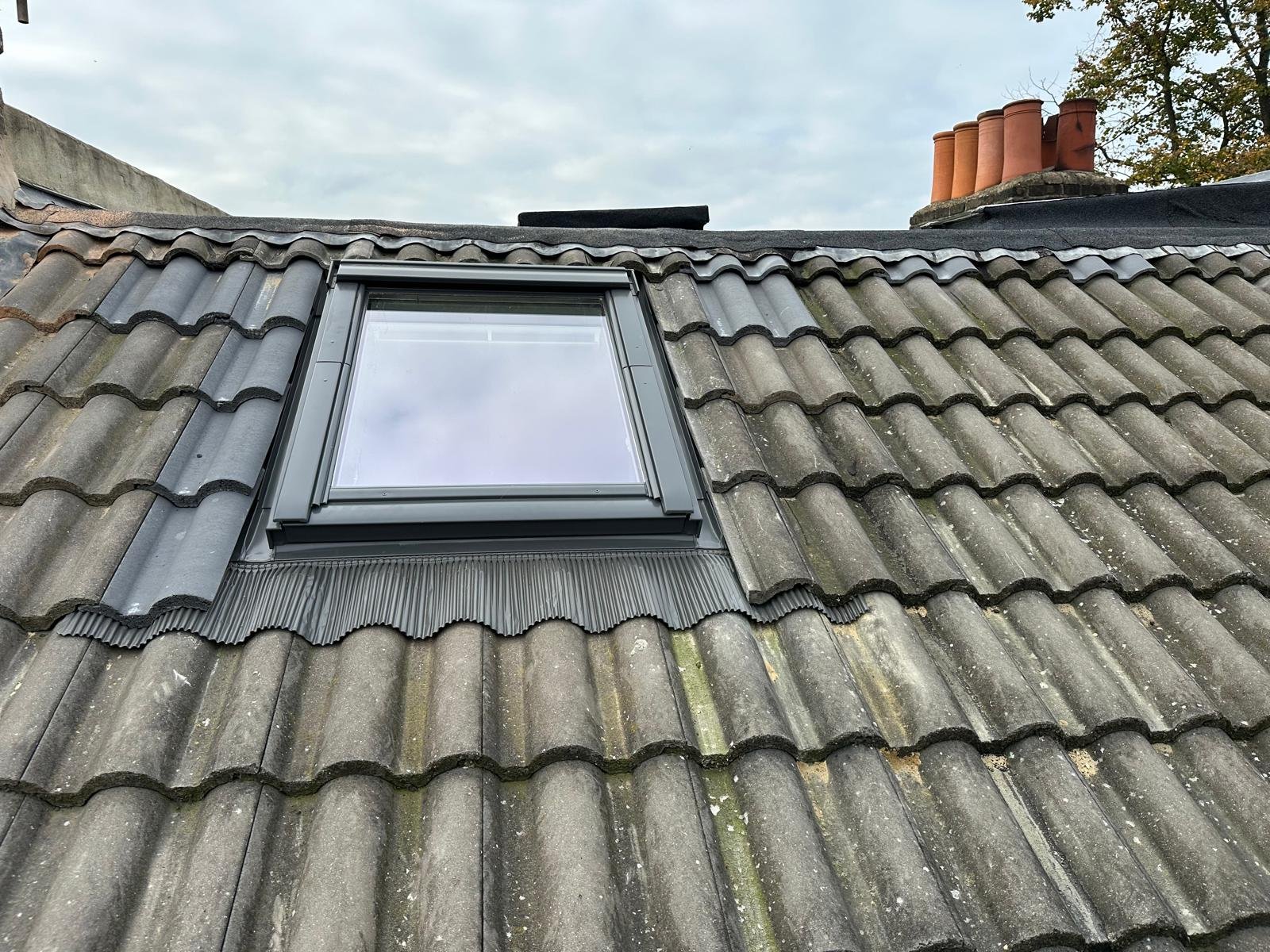
Velux is the dominant brand in pitched roof windows and has become so synonymous with the product that the brand name is used generically. Velux roof windows — and equivalent products from Fakro, Roto, and other manufacturers — are installed into the plane of the pitched roof between the existing rafters, sitting flush with the roof surface. They are available as centre-pivot (the most common), top-hung (which opens outward from the bottom for maximum ventilation), and fixed-light units.
For loft conversion bedrooms, a Velux roof window is almost always the first choice — it provides excellent natural light, can be opened for ventilation, and does not alter the external roofline in a way that requires planning permission in most cases. Modern Velux windows come with integrated flashings designed for specific tile profiles, making installation weatherproof when carried out by an experienced contractor.
For properties with loft conversions incorporating rooflight windows, these are directly linked to our loft conversions Hayes and West London service.
Flat roof dome lights and polycarbonate units
For flat roofs — common on single-storey extensions across West London — a traditional dome light consists of a kerb (raised upstand frame fixed to the roof deck) with a domed polycarbonate or acrylic cover. These are inexpensive, quick to install, and effective at bringing light into rooms below flat roofs. Their main limitation is aesthetic — the domed polycarbonate profile is functional rather than elegant — and thermal performance is limited compared to modern flat glass units.
Dome lights are particularly suitable for utility areas, garages, and corridors where light is the primary requirement. For main living spaces, the stepped-up flat glass skylight units described below offer a significantly more attractive and thermally efficient alternative.
Flat roof glass skylight units
Modern flat roof skylights use thermally broken aluminium frames with double or triple-glazed units, typically with a slight pitch (usually 3-5 degrees) to allow rainwater to drain and reduce condensation. These units sit on an upstand above the roof surface and can be fixed, openable, or electric-opening with rain sensors that close the unit automatically. Walk-on versions with laminated safety glass are available where the skylight will be part of a terrace or roof garden.
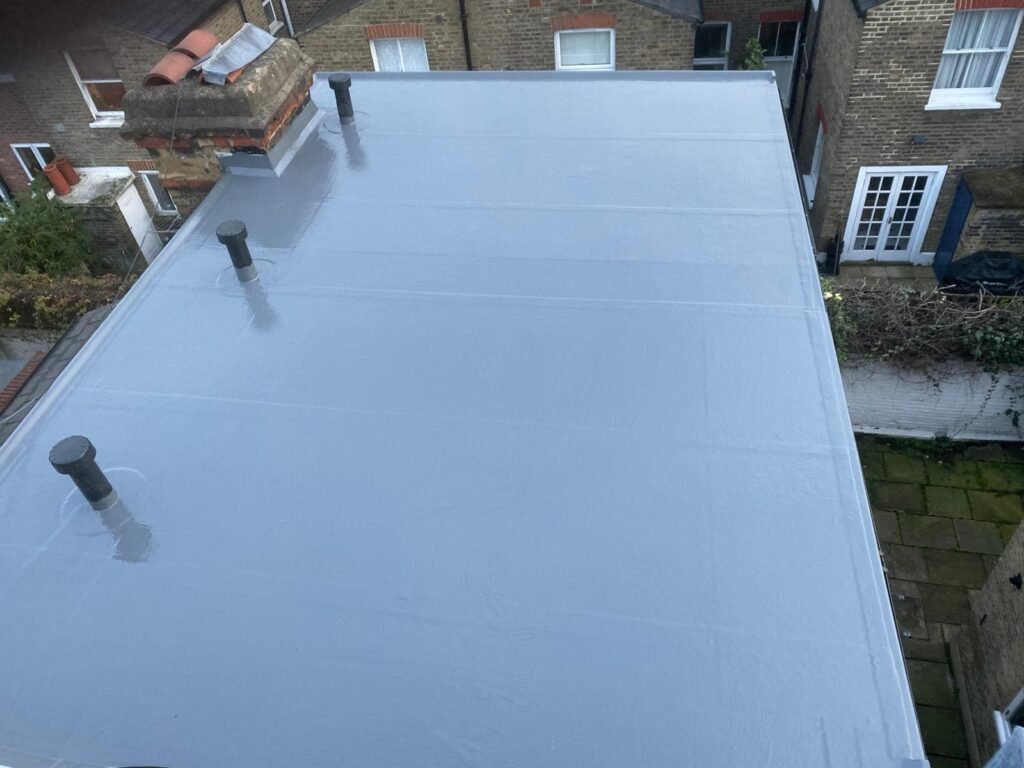
For kitchen extensions, open-plan living areas, and hallways, a flush flat glass skylight transforms the space below in a way that a traditional dome light simply cannot. The frame profiles of leading manufacturers such as Korniche, Atlas, and Glazing Vision are slimline and architecturally considered, sitting cleanly against the flat roof membrane. Proper installation requires the upstand to be fully waterproofed and integrated into the flat roofing membrane — this is why we always install flat roof lights as part of our broader flat roofing West London service.
Roof lanterns
A roof lantern is a ridge-height glazed structure — essentially a glazed pyramid or rectangular greenhouse dome — sitting above a flat roof opening. Roof lanterns provide significantly more natural light than a flat skylight of the same footprint, because the angled glazing panels catch light from multiple angles throughout the day. They also create a dramatic architectural focal point in open-plan kitchens, dining rooms, and orangeries.
Roof lanterns require a structural opening in the roof structure and a kerbless or integrated connection to the flat roofing membrane. They are more expensive than flat skylights — expect to pay between £2,500 and £8,000 depending on size and specification — but the visual and spatial impact on the room below is transformative.
Skylight installation: what the process involves
For a pitched roof Velux installation, the process involves: marking and cutting the opening between rafters (or repositioning a rafter if the required size necessitates structural adjustment), installing the manufacturer’s flashing kit over the surrounding tile or slate courses, fitting the window frame and glazed unit, and making good the internal plasterwork reveal. A standard installation on an existing loft room typically takes one to two days.
For flat roof skylights and roof lanterns, the process is more involved: cutting the structural deck opening with appropriate trimming of joists, building and waterproofing the upstand, integrating the skylight frame into the flat roof membrane (using our GRP or liquid membrane systems), fitting the glazed unit, and completing the internal reveal. This work typically takes two to four days and requires careful integration with the existing or new flat roof waterproofing.
Weatherproofing the junction between any skylight and the surrounding roof covering is the most critical stage of the installation. A poorly flashed skylight — whether Velux or flat roof — will leak within months, not years. Our experience in both leadwork and flashing repair and flat roofing means we approach these junctions with the care they require.
Repairing a leaking skylight — common causes and solutions
Skylight leaks are among the most common roofing complaints in West London, and they have a limited number of likely causes that an experienced roofer can identify quickly. The most common is flashing failure — either the lead or aluminium flashing around the perimeter of the window has cracked, lifted, or pulled away from the surrounding tiles, allowing water to track down behind the window frame.
On older Velux windows, the integral rubber seal between the frame and the glazed unit can harden and crack over time, allowing condensation and eventually rainwater to enter around the glass. This is particularly common on units that are more than fifteen years old and in exposed positions.
Condensation inside the double-glazed unit — visible as a fogging or misting effect on the inner glass surface — indicates that the hermetic seal of the unit has failed and the insulating gas between the panes has been lost. This cannot be repaired and requires replacement of the glazed unit (not the entire window frame in most cases).
A cracked or broken glazing pane should be replaced promptly — not just for weatherproofing but for safety. Roof windows are overhead glass, and any failure of the glazing is a safety risk as well as a weather protection issue.
Planning considerations for skylights in West London
Permitted development rights allow skylights on pitched roofs to be installed without planning permission in most cases, as long as they do not protrude more than 150mm above the plane of the roof and do not exceed the highest point of the roof. Front slope (street-facing) skylights on principal elevations may be subject to restrictions in conservation areas.
Flat roof skylights and roof lanterns on extensions generally fall within the permitted development allowance for extensions, but if the flat roof extension itself required planning permission, the glazing above it should be confirmed with the local planning authority. In the London Borough of Hillingdon, which covers Hayes, a pre-application enquiry with the planning department can prevent costly mistakes.
Frequently asked questions — skylight installation West London
Q: Can a skylight be installed in any pitched roof?
In most cases, yes — as long as the rafter spacing allows for a standard unit size or can be adapted. Tiled roofs, slate roofs, and metal profile roofs can all accommodate skylights with the appropriate flashing kit. Very shallow-pitched roofs (below 15 degrees) require specific low-pitch flashing kits to manage the reduced drainage.
Q: Are electric skylights worth the extra cost?
For skylights that are difficult to reach by hand — particularly in vaulted ceilings or high roof spaces — electric operation with remote control or smart home integration is a significant quality-of-life improvement. Models with automatic rain sensors that close on detecting moisture are particularly practical in the UK climate.
Q: How much natural light does a skylight add?
A roof window provides approximately three times more natural light than a vertical window of the same area, due to its angle relative to the sky. A 940mm x 1140mm Velux window (a commonly fitted size) can genuinely transform the daylight in a 12–15m² room from dim to bright.
Q: Do skylights increase heat loss significantly?
Modern A-rated double-glazed skylights have U-values of 1.3–1.6 W/m²K, comparable to good quality wall windows. Triple-glazed units achieve 0.7–1.0 W/m²K. The solar gain from a skylight in winter can actually offset some of the heat loss, particularly on south-facing slopes.