Why slate roofing remains the gold standard in West London
Slate roofing has been the roofing material of choice for UK homes for over 400 years, and its dominance across West London, Hayes, and Middlesex is no accident. Natural slate offers a combination of longevity, weather resistance, and aesthetic appeal that no manufactured alternative has fully replicated. When you walk through Victorian and Edwardian streets in Ealing, Hillingdon, and Hounslow, the dominant roof covering you see is natural slate — a testament to how well this material has weathered over a century of British weather.
For homeowners in West London, slate remains highly desirable for multiple reasons. It is fireproof, waterproof under proper installation, rot-proof, and under ideal conditions can last well over 100 years. Properties with original slate roofs often attract higher valuations, particularly on period homes where character and heritage are selling points. However, while the material itself is extraordinarily durable, the fixings, bedding, and flashing around the slates are not, and this is where almost every slate roof problem begins.
Understanding the difference between a failing slate and a failing roof system helps West London homeowners make smarter, more cost-effective decisions — rather than replacing an entire roof when targeted repairs are all that is needed.
Common signs your slate roof needs repair
The most obvious sign of a slate roof problem is water appearing inside the property — either as damp patches on upper-floor ceilings or visible dripping. However, by the time water enters the property, the underlying issue has usually been developing for months. There are earlier, more visible warning signs every homeowner should know.
Slipped or missing slates are the most visible symptom. When the copper or steel nail holding a slate corrodes — a process called nail sickness — the slate slides out of position or drops entirely. A single slipped slate creates a gap that can allow significant water ingress during heavy rain. In West London’s climate, where autumn and winter bring extended wet periods, even a small gap can lead to soaked insulation, rotting battens, and water tracking down to ceiling plasterwork.
Moss and algae growth is another indicator that warrants attention. While a thin moss layer is largely cosmetic, heavy moss accumulation retains moisture against the surface and roots can physically lift the edges of slates over time. Blocked gutters resulting from moss debris also redirect water behind the fascia, creating damp problems at wall-plate level.
Cracked or spalling slates — where the surface of the slate has begun to delaminate or split horizontally — indicate that the slate has reached the end of its service life. This is most common with lower-quality Welsh, Spanish, or Chinese slates and is distinct from nail sickness, as the material itself is failing rather than the fixing.
Daylight visible from the loft space, or insulation that is persistently damp despite no visible ceiling staining, are signs that the roof covering has small gaps allowing wind-driven rain to penetrate without producing the dramatic drip that homeowners typically notice.
Slate roof repair costs in West London — what to expect in 2026
Roofing costs vary depending on access, roof pitch, slate type, and the extent of damage, but the following gives a realistic picture of what West London homeowners are paying in 2026.
Replacing a small number of individual slates — typically one to five — is a straightforward job that usually costs between £150 and £350 including materials, access by ladder, and a basic lead flashing check. This kind of patch repair is cost-effective when the roof as a whole is in good condition and only isolated slates have slipped due to nail failure.
A section repair — addressing a patch of ten to thirty slates with associated re-bedding of ridges or pointing — typically ranges from £400 to £900 depending on access requirements and whether scaffolding is needed. On steeper-pitched roofs or properties where ladder access is unsafe, scaffolding adds a significant cost but is non-negotiable for safe working.
A full slate roof replacement on an average semi-detached West London property (roughly 50–70m² of roof area) typically costs between £8,000 and £16,000 depending on the slate specification chosen. Welsh slate commands a premium — for good reason, as its quality and lifespan significantly outperform imported alternatives — while Spanish or reclaimed slate offers a more affordable entry point.
Emergency roof repairs — for storm damage, active leaks, or fallen chimney pots that have dislodged slates — carry a call-out premium and typically start at £250–£400 for an emergency make-safe, with permanent repairs carried out once access can be safely established.
When to repair vs when to replace your slate roof
This is the question most West London homeowners struggle with, and the honest answer requires a proper roof inspection rather than a guess from ground level. That said, there are reliable rules of thumb that guide the decision.
If fewer than 20% of the slates on the roof are affected, targeted repairs are almost always the right choice. A good roofer will strip the affected area, replace nails and slates, renew any lead flashing that has failed, and re-point the ridge where necessary. Done properly, this adds ten to twenty years of serviceable life.
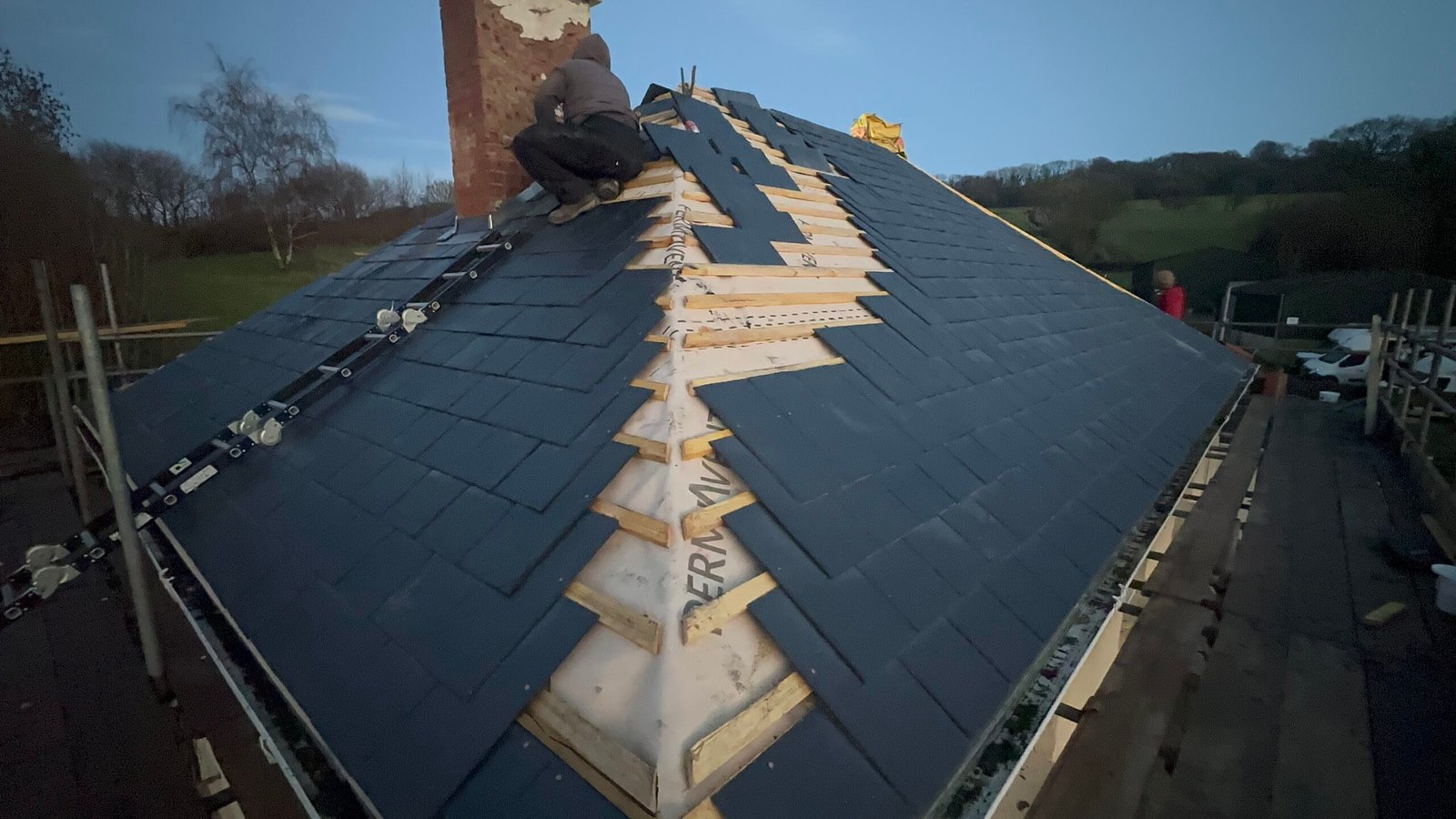
When nail sickness is widespread across the entire roof — meaning the majority of slates are no longer properly fixed — repair becomes a false economy. Addressing one section simply exposes the next weakest area, and you end up spending more on repeated call-outs over five years than a replacement would have cost. At this stage, a full replacement with new battens, breathable membrane, and quality slates is the more sensible investment.
Heritage properties — particularly those in conservation areas of Ealing, Richmond, or Hillingdon — often have planning restrictions on roof materials. Before replacing original slates, always check with the local planning authority to confirm whether like-for-like replacement with natural slate is required, or whether alternatives are permitted.
Lead flashing: the most common cause of slate roof leaks
It is a common misconception that most slate roof leaks originate from the slates themselves. In reality, lead flashing failure — particularly around chimneys, skylights, dormer walls, and valleys — is responsible for the majority of roof leaks on West London properties.
Lead flashing seals the junction between the roof covering and any vertical surface — chimney stacks, upstands, and abutments. Over time, the lead expands and contracts with temperature changes, and the pointing mortar that holds it against the masonry can crack and allow water to run directly down inside the junction. The result is a leak that appears to originate from the roof covering but is actually a flashing failure.
On properties where the lead flashing is original — common on 1930s semi-detached homes across Hayes, Southall, and Ealing — it may have been in place for 80 to 90 years. At this age, the lead itself can be sound (lead lasts extremely well), but the pointing will almost certainly need renewal. A roofing contractor should check all flashings as part of any slate repair inspection.
For advice on lead flashing and chimney waterproofing specifically, see our dedicated guide on our specialist leadwork and lead flashing repair service page.
How Roof Techies approaches slate roof repair in West London
At Roof Techies, every slate roof repair begins with a thorough inspection — not a ground-level glance, but a proper examination of the roof surface, batten condition, felt or membrane underneath, ridge bedding, and all lead flashings. This inspection gives homeowners a clear, honest picture of what needs addressing now versus what can wait, without unnecessary upselling.
We carry a stock of Welsh, Spanish, and reclaimed matching slates so that where visual matching matters — on a period property or a street-facing slope — the repair blends rather than stands out. For emergency repairs, we provide a same-day or next-day response across Hayes, Ealing, Hillingdon, Hounslow, and surrounding areas, with a temporary weatherproof seal if a permanent repair cannot be completed in a single visit.
All our slate roofing work is backed by a workmanship guarantee, and as a fully insured roofing contractor operating from our base in Hayes, UB3 2TL, we carry full public liability cover on every job.
Frequently asked questions about slate roof repair
Q: How long does slate roof repair take?
For a small patch repair involving five to ten slates, a skilled roofer can typically complete the work in a single day. Larger section repairs may take two to three days, particularly where scaffolding is required. A full roof replacement is usually a five to ten day job depending on weather and roof size.
Q: Can I repair a slate roof myself?
We advise strongly against DIY slate roof work. The risks are significant — not just from working at height, but from the potential to cause additional damage by walking on adjacent slates without specialist boards. Even a single cracked slate from foot traffic can create a new leak point. The cost of professional repair is almost always less than the cost of remedying a botched DIY attempt.
Q: Does home insurance cover slate roof repair?
This depends on your policy and the cause of damage. Storm damage to slates is usually covered, but gradual deterioration — nail sickness, general wear and tear — typically is not. Always contact your insurer before authorising repairs if you believe the damage is storm-related, as they may want to send an assessor.
Q: How do I find a reputable roofer in West London?
Look for a contractor who offers a written quotation, carries public liability insurance, and provides a workmanship guarantee. Be wary of unsolicited cold-callers who knock on your door claiming to have spotted a problem. Always ask for references or check Google and Checkatrade reviews.