The flat roof problem and why modern systems have solved it
Flat roofs have historically had a poor reputation in the UK. Anyone who has owned a 1960s or 1970s property with a felt-covered flat roof extension will know the pattern: a few years of trouble-free service, followed by blistering, cracking, pooling water, and eventually a persistent leak that no amount of patching fully resolves. That reputation, however, belongs to a previous era of roofing materials and installation methods. Modern flat roofing systems — GRP fibreglass, liquid polyurethane membrane, and modified EPDM rubber — bear almost no resemblance to the felt systems of thirty years ago in terms of performance or longevity.
For West London homeowners, flat roofs appear on single-storey rear extensions, garage roofs, bay window tops, dormer cheeks, and the roofs of commercial outbuildings. In Hayes and across the London Borough of Hillingdon, the post-war housing stock includes a significant proportion of properties with flat-roof extensions that are now reaching end of life and need replacement with a superior modern system.
This guide explains the three primary flat roofing systems available in 2026, compares their costs, lifespans and suitability for different applications, and helps you make the right decision for your specific property.
GRP fibreglass flat roofing – the premium choice
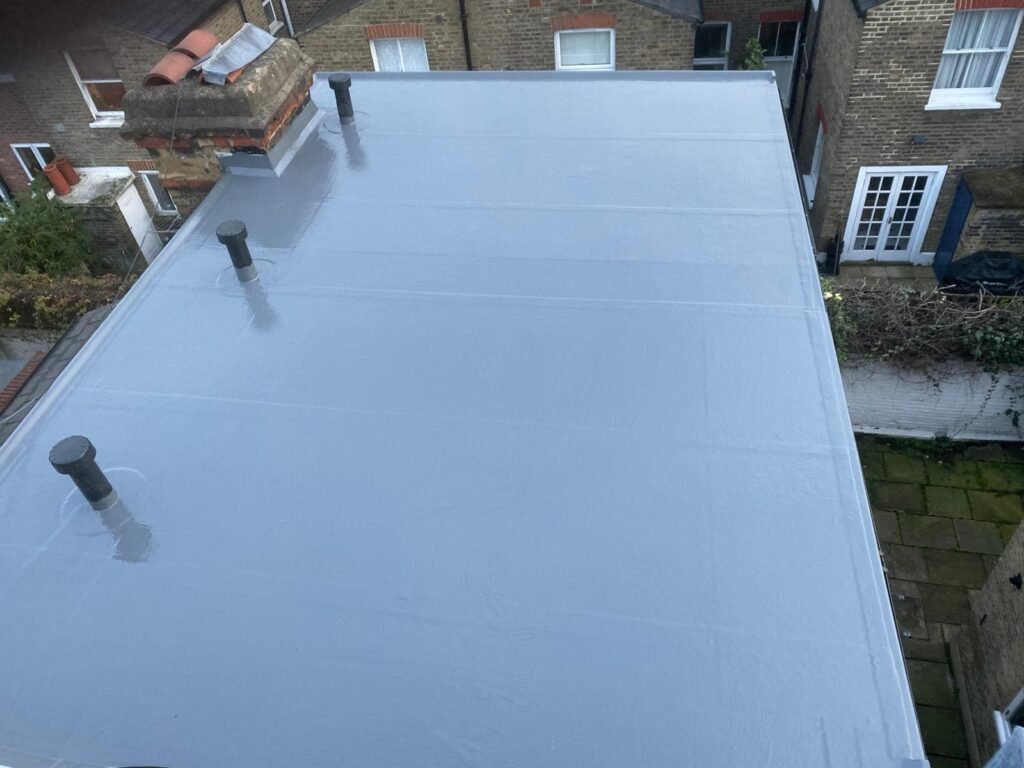
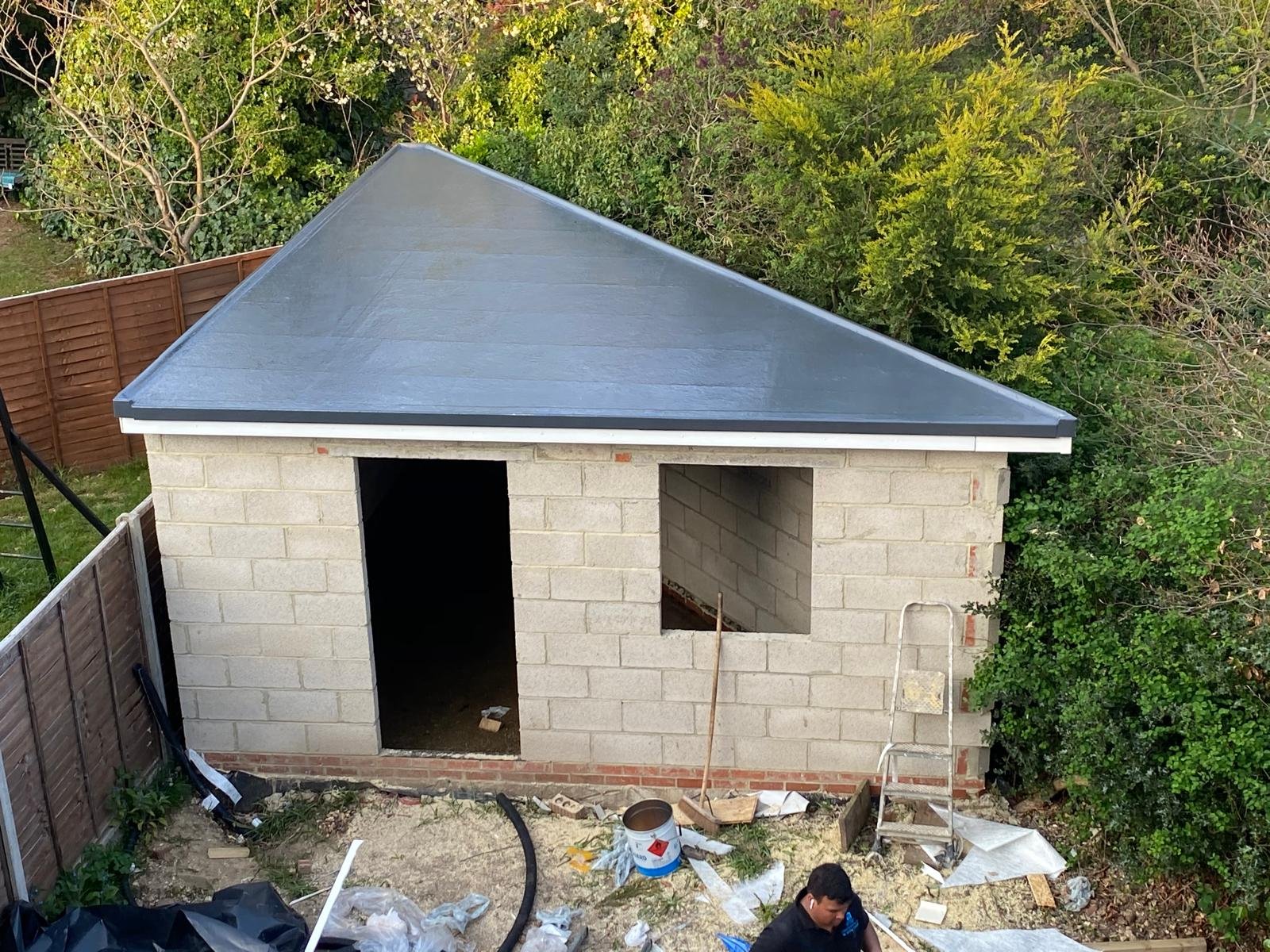
GRP stands for Glass Reinforced Plastic, and fibreglass flat roofing has become the dominant choice for residential flat roof installations across West London over the past fifteen years. The system involves laying glass fibre matting over a plywood deck, saturating it with resin, and then applying a top coat in the colour of your choice – most commonly grey or light green. Once cured, the result is a completely seamless, rigid waterproof surface.
The key advantage of GRP over felt is the complete absence of joints. Traditional felt systems fail at seams and overlaps where water finds a route in. A properly installed GRP roof has no seams — it is one continuous surface from edge to edge, including all upstands around walls, skylights, and drainage outlets. This seamless quality is why GRP installations typically carry a 25-year manufacturer guarantee when installed by a trained contractor.
GRP is also extremely durable under foot traffic, making it the preferred choice for flat roofs that may need to be accessed for window cleaning or maintenance. The rigidity that makes it walkable also means it cannot flex around structural movement, however — on roofs with a high degree of building movement or on timber substrates prone to shrinkage, this can eventually cause hairline cracking at the edges.
Cost-wise, a GRP flat roof on a typical single-storey rear extension in West London (approximately 15–25m²) typically runs between £1,800 and £3,500 fully installed in 2026, depending on the existing deck condition and whether any rotten plywood needs replacing.
Liquid membrane flat roofing – the versatile waterproofing solution
Liquid roofing systems use a cold-applied polyurethane, PMMA, or rubber coating that is painted onto the roof surface in two or more coats, curing to form a seamless, elastic membrane. Because the system is applied as a liquid, it can follow complex roof geometries — multiple upstands, penetrations, drainage details, and intricate parapet conditions — without the need to cut and overlap separate sheets.
The elasticity of liquid membranes is their defining advantage over GRP. A quality polyurethane liquid system can flex by 300–600% of its original dimensions before failing, meaning that even where the roof deck moves seasonally with timber shrinkage and expansion, the membrane accommodates that movement without cracking. For this reason, liquid membranes are the preferred choice for roofs with a lot of detail work, complex shapes, or where the substrate is known to be prone to movement.
Liquid roofing systems are also an excellent choice for refurbishment projects — roofs where the existing deck is sound but the waterproofing layer has failed. Rather than stripping and replacing the entire roof, a liquid coating can often be applied directly over the existing surface (after preparation), dramatically reducing cost and disruption. This is particularly relevant for West London homeowners with commercial buildings, large garage roofs, or industrial extensions.
A standard liquid polyurethane roof on a 20m² extension typically costs between £1,500 and £2,800 in West London in 2026. For more information on liquid roofing applications, visit our dedicated liquid roofing and waterproofing services page.
Modified felt and EPDM – the budget-conscious option
Modern modified bitumen felt — using SBS or APP polymer modification rather than the traditional oxidised bitumen of older felt systems — is a significant improvement over the felt roofs of the 1970s and 1980s. Three-layer torch-on felt systems, installed by a competent contractor, can provide fifteen to twenty years of reliable weatherproofing at a lower cost than GRP or liquid membrane.
EPDM rubber roofing (Ethylene Propylene Diene Monomer) is a single-ply membrane system well-established in North America and increasingly popular in the UK for both residential and commercial flat roofing. EPDM sheets come in widths of up to 3 metres, reducing the number of seams on smaller roofs, and the material itself is extremely UV-resistant with a quoted lifespan of 40–50 years in ideal conditions. On smaller garage roofs or outhouse roofs where a single sheet can cover the entire area, EPDM is a cost-effective and long-lasting option.
Both modified felt and EPDM cost less than GRP upfront typically £900 to £1,800 for a 20m² extension but it is important to account for the likely maintenance and replacement cycle when comparing whole-life costs across all three systems.
How to identify a flat roof problem before it becomes a crisis
Flat roofs fail differently from pitched roofs. Because water cannot run off immediately, standing water or ponding is a common issue on flat roofs with inadequate falls. Ponding is not always a sign of imminent failure, but it does accelerate degradation of all flat roofing materials, and persistent ponding should be investigated.
Blistering of the surface visible bubbles beneath the membrane indicates that moisture has become trapped between layers. This is most common with older felt systems and usually means the roof is approaching end of life. Small blisters may be managed, but widespread blistering generally means the membrane has separated from the deck and needs replacement.
Cracking, particularly at edges, upstands, and drainage outlets, is a sign that the membrane is no longer flexible enough to accommodate movement. Water enters through cracks and, on timber-decked flat roofs, rapidly begins to rot the structural plywood beneath. By the time the ceiling below shows damp staining, the deck may already have significant rot that adds cost to the replacement.
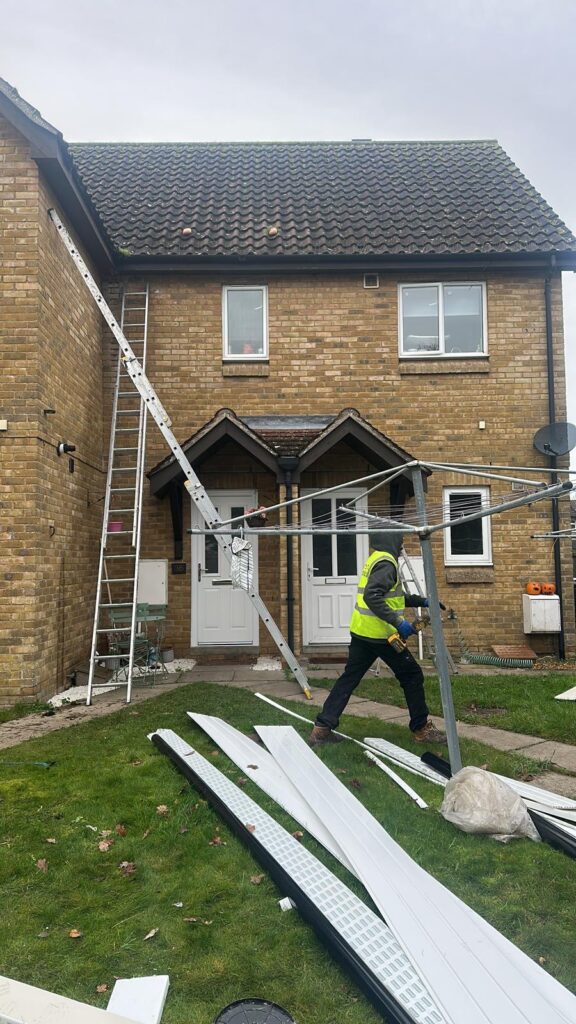
If you can see daylight through any gap at the edge of the roof where it meets the fascia or parapet wall, water is almost certainly getting in. Check your fascias and soffits as well a leaking flat roof often causes rot in the fascia board behind the gutter, and that rot may be more extensive than it appears from ground level. For fascia and soffit concerns, see our dedicated fascias soffits and guttering page.
Flat roof drainage: the most overlooked aspect of flat roofing
A flat roof should never be truly flat — a minimum fall of 1:40 (approximately 1.5 degrees) is required to allow water to drain to the outlet points. Many flat roof problems in West London are not material failures at all — they are drainage failures caused by incorrect fall, blocked outlets, or gutters that are too small for the roof catchment area.
On existing properties, falls are sometimes lost when roof decks are overlaid with additional layers without re-profiling the underlying structure. This creates a flat — or even reverse-fall — condition where water pools away from the drainage point. When replacing a flat roof, a good contractor will check and correct falls, not just replace the waterproofing layer.
Roof drainage points should be cleared at least twice a year — typically in late autumn after leaf fall, and again in late spring. A blocked outlet on a flat roof can cause the water level to rise to the top of the upstand flashing and overflow inside the building within hours of heavy rainfall.
Choosing the right flat roofing contractor in West London
The quality of installation matters as much as the system chosen. The most expensive GRP system installed carelessly will fail faster than a modest EPDM system installed with care. When getting quotations for flat roof work in West London, ask each contractor to specify: the system they are installing, the thickness of the membrane or number of layers, the deck preparation they will carry out, and the guarantee period and who backs it.
Avoid contractors who quote exclusively by phone without inspecting the roof, who cannot provide evidence of previous installations, or who suggest applying a new layer over an existing failing membrane without stripping and investigating the deck beneath. Overlaying a failed roof without deck inspection risks trapping moisture that rapidly rots the structure.
Roof Techies operates from Hayes, UB3 2TL, and carries out GRP, liquid membrane, and felt flat roofing across West London. All installations are backed by workmanship guarantees, and we carry full public liability insurance on every job.
Frequently asked questions flat roofing West London
Q: How long does a GRP flat roof last?
A properly installed GRP flat roof carries a 25-year guarantee from most reputable manufacturers when installed by a trained contractor. With proper maintenance annual inspection and keeping outlets clear – GRP can perform for 30-plus years.
Q: Can a flat roof be converted to a pitched roof?
Yes, and this is an option some West London homeowners pursue if they have experienced repeated flat roof problems. A warm pitched roof over an extension is typically more expensive upfront but eliminates long-term flat roof maintenance. It does, however, usually require planning permission and building regulations approval.
Q: Is a flat roof suitable for a living or garden roof?
Yes, both warm roof (insulation above deck) and inverted roof (insulation above waterproofing) systems can support green or garden roof construction. A green roof adds significant insulation value and can extend waterproofing membrane life by protecting it from UV degradation.
Q: My flat roof leaks only in heavy rain. What causes that?
Intermittent leaks that appear only in heavy rain are usually caused by a small crack or gap that is overwhelmed when water levels rise above it — typically a crack in a flashing, a small gap at an upstand, or a partially blocked outlet causing the water level to build up.